


Zen Connect - Word Puzzle
4.643.00 Reviews
App Specs
- Version
- 1.1.5
- Updated On
- License
- Free
- Downloads
- 50,000+
- Developer
- Rally Games Co
- Categories
- Word
- Platform
- Android
Screenshots

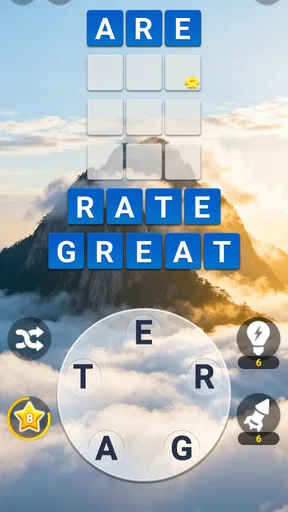
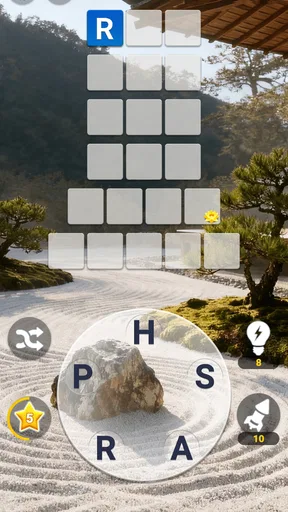
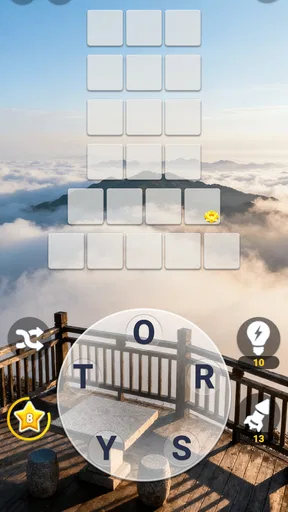
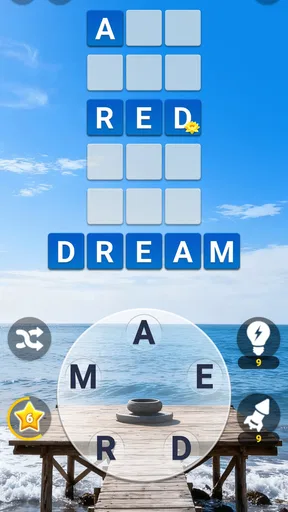
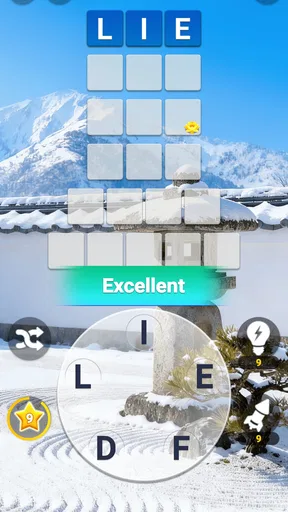
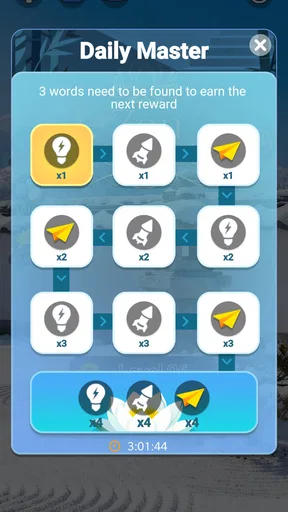
 Analysis by AppCompare
I went into Zen Connect - Word Puzzle expecting a quiet way to fill a few spare minutes, and that is still the best way to understand it. This is a free word game from Rally Games Co, built around calm puzzle sessions rather than competitive pressure or a long-form adventure. Its store summary promises a relaxing mental break, and in practice the appeal is easy to grasp: open it when you want to focus on language for a while, solve a few puzzles, then put it away without feeling that you have started a major commitment.
The game belongs to the word-puzzle category, carries an Everyone age rating, and runs on Android devices using version 7.0 or later. It has reached over 50 thousand installs, with a 4.6 average from roughly 300 ratings and 42 written reviews. Those figures suggest a small but positive audience rather than a huge, established puzzle platform. That distinction matters. I see it as a focused, approachable choice for people who prefer a gentle vocabulary game over a feature-heavy daily challenge service.
How Zen Connect feels during ordinary play
I find ordinary play works best when I treat each puzzle as a small pause rather than a task to clear as quickly as possible. That approach makes it easier to notice a connection I might overlook while guessing, and it keeps the game’s quiet pace from feeling like a race. It also sets up the next question: what makes solving one puzzle satisfying enough to begin another?
A calm format that works best in short sessions
The strongest quality here is the low mental friction. I do not need to prepare for a long match, remember a complicated rule set, or learn a collection of special abilities before I can enjoy a round. The presentation is aimed at a relaxed word-solving mood, so the game makes more sense as a small reset between tasks than as something demanding my full attention for an evening.
A realistic use case is a commute, a coffee break, or the few minutes before bed when I want something more engaging than scrolling but less intense than a strategy game. I can treat each puzzle as a contained exercise: look at the available connections, test a likely word, and keep working until the pattern becomes clear. That rhythm gives the game a useful middle ground between a crossword and a casual matching title.
What I appreciate is that the concept does not seem to depend on speed. A word puzzle can become stressful when it constantly pushes timers, rankings, or streaks. Zen Connect is more attractive to players who want to think at their own pace. If you enjoy the satisfaction of recognizing a relationship between words, but dislike the feeling of being chased by a countdown, this style should suit you better than many fast daily word games.
What the name suggests, and what to expect instead
The “Zen” part of the name sets an expectation of simplicity and calm, not a deep language-learning course. I would not choose it as a replacement for a dictionary app, a spelling tutor, or a serious vocabulary trainer. Its value is in the act of solving. You are using language skills, pattern recognition, and patience, but the game is primarily entertainment rather than structured education.
Worth Reading Before You Choose

EA SPORTS FC Mobile 26 Is a Bigger Football Game, but It Takes Time

Flipboard Shows What News Apps Must Do Beyond the Feed

Switching to Android Auto Means Rethinking Your Driving Routine

Google Calendar Makes a Crowded Week Easier to Manage

Ludo King Makes the Most of the Minutes Between Plans

Baby Panda World Brings Quick Play to Modern Phones, but Its Game Library Feels Busy
That also means the experience may feel too light for players who want extensive progression. People who enjoy collecting achievements, competing on leaderboards, or building a large profile around daily performance may find a more established word-game alternative more satisfying. Zen Connect is better suited to the player who wants a clean puzzle break without turning every session into a personal score report.
Perceived speed on compatible devices
Because this is a focused word game rather than a visually elaborate action title, I expect it to feel relatively undemanding during normal play. The puzzle format does not suggest the kind of continuous animation or complex scene loading that usually makes a game feel heavy. In my use, the important performance question is not whether it can render a spectacular world; it is whether the interface responds quickly enough when I am testing words and moving through a puzzle.
That simplicity is a practical advantage. A game that asks me to solve one compact puzzle at a time is easier to fit into a short break than an app that needs a large session to feel worthwhile. It also reduces the annoyance of returning to a half-finished activity after an interruption. I can close the game mentally as well as physically and come back when I have the attention for another round.
Still, I would not confuse a restrained design with a guarantee of perfect performance on every phone. The current release is version 1.1.5, and the minimum Android requirement is 7.0, so compatibility covers a broad range of devices but not every older handset still in circulation. On a phone with limited free storage, an aging processor, or a crowded background workload, startup and screen transitions can feel less immediate than they do on a newer device.
What happens during heavier use
The most demanding moment for me is not solving a puzzle itself. It is the repeated cycle of opening the game, playing several sessions, switching to another app, and returning later. That is where memory pressure, background activity, and the phone’s general condition become more noticeable than the puzzle design. If the game is pushed out of memory, I may need to reopen it rather than continue exactly where I left off.
For that reason, I recommend a simple habit: if you are in the middle of a puzzle and need to leave, finish a natural stopping point before switching away. That is useful advice for any casual game, but it matters especially here because the appeal comes from relaxed concentration. Losing the context of a nearly solved word connection is more irritating than restarting a quick arcade attempt.
Longer sessions also reveal the game’s limits as a lightweight pastime. The calm pace is pleasant for a handful of puzzles, but players who expect constant novelty may begin to notice the boundaries of a compact word-game format. I would use it in bursts rather than assuming it will replace every other puzzle app on my phone. Its best performance profile is also its design identity: small, focused, and easy to pick up.
Stability and recovering after interruptions
Reliability matters more to me here than raw speed. A word puzzle does not need advanced graphics, but it does need to preserve the feeling that my attention is being respected. Unexpected closing, a lost position, or a confusing return from the background would undermine the calm experience much faster than a slightly slow transition.
My practical approach is to keep the app updated when a newer release becomes available and to avoid judging it solely from one difficult session on a heavily loaded phone. The version shown is 1.1.5, so I would make sure that is the version installed before troubleshooting unusual behavior. If the game ever seems sluggish after a long day of multitasking, closing other demanding apps and reopening Zen Connect is a sensible first step.
Recovery is also about expectations. I would not begin a puzzle immediately before an important appointment if I know I may need to abandon it without warning. The game is a good companion for flexible time, not necessarily for moments when every second and every unfinished screen matters. That is a small trade-off, but it is the kind of detail that affects whether a casual game becomes a regular habit.
Battery, storage, and older-device considerations
A word-focused game should generally place less strain on a phone than a modern 3D title, although the exact experience depends on the device and what else is running. I would expect the main resource cost to come from keeping the app open and interacting with it, not from rendering a large animated environment. That makes it a more sensible candidate for an older compatible phone than a visually demanding game.
Even so, “lightweight” should not be read as “invisible.” Any app can feel slower when storage is nearly full, and older Android devices can handle app switching less smoothly than newer ones. If your handset is close to its limits, the best test is straightforward: install the game, play through several short sessions, and watch whether returning from another app remains comfortable. The minimum operating-system requirement tells me the software supports older Android versions, but it does not promise identical responsiveness across every device released with them.
People using iOS should also check the current platform-specific store information before downloading, because operating-system compatibility and behavior can differ between platforms. I would not assume that an Android requirement automatically describes the iPhone or iPad experience. That is particularly important if you are choosing the game for an older Apple device or planning to move between platforms.
How it compares with familiar word-game alternatives
Compared with crossword apps, Zen Connect appears easier to approach when I want a quick visual relationship puzzle rather than clues that require a longer written answer. Crosswords are often better for players who enjoy detailed definitions, a larger grid, and a more traditional newspaper feel. I would choose a crossword when I want a sustained vocabulary workout; I would choose this game when I want a softer entry point and a shorter mental reset.
Compared with anagram games, the attraction is different again. Anagram apps reward rapid rearrangement and often encourage repeated attempts under pressure. Zen Connect is more appealing if I enjoy noticing how words fit together instead of racing to produce as many combinations as possible. Players who thrive on timers and high scores may prefer the anagram alternative, while players who find that pressure tiring may appreciate this calmer direction.
Compared with daily word games, the key trade-off is routine. Daily titles often build their identity around one shared challenge and a social conversation about results. Zen Connect feels more private and flexible. I can open it because I have a few minutes, not because a particular daily window is waiting for me. That freedom is a strength, although it may also mean less motivation for someone who needs a streak or a community to keep playing.
There is also a difference from large puzzle collections. A broad collection can offer sudoku, logic grids, crosswords, trivia, and word searches in one place. Zen Connect is a narrower recommendation, but that narrowness can be refreshing. I do not have to browse through several modes before finding the kind of calm word activity I wanted. The drawback is obvious: if your mood changes frequently, a single-purpose game may run out of appeal sooner than an all-in-one puzzle app.
Who will get the most from it
I would recommend it to casual players who like language-based puzzles but do not want a demanding competitive environment. It is also a reasonable choice for someone looking for an Everyone-rated game that can occupy short breaks without requiring a large learning curve. The free price makes trying it easy, and the in-app purchase price of $5.99 per item is something to keep in mind before treating the game as a completely cost-free experience.
That purchase model deserves a moment of attention. I would start by playing without buying anything and decide whether the basic loop genuinely fits my habits. A calm word game only earns a place on my phone if I enjoy the solving itself; spending money cannot fix a puzzle format that does not match my taste. If you are comfortable with optional purchases, the listed price per item is clear enough to factor into that decision, but I would not install it expecting a premium, expansive game simply because paid items exist.
I would skip it if my priority is a rigorous vocabulary curriculum, a large multiplayer community, or a visually rich adventure. I would also look elsewhere if I need detailed accessibility controls, extensive customization, or a single app containing many different puzzle types. Those are not criticisms of the central idea; they are signs that the game is designed for a particular kind of player rather than trying to cover every word-game preference.
Small habits that make the experience better
My first tip is to treat difficult puzzles as a change-of-angle exercise rather than a test of speed. When I get stuck, I stop trying to force the most obvious word and look for a less literal connection. That preserves the relaxed mood and makes the eventual solution feel earned. It is a better fit for this game than tapping randomly until something works.
My second tip is to use it as a transition activity. A short session after work or before reading can help separate one part of the day from another, while a long uninterrupted session may make the format feel more repetitive. The game’s calm identity works best when I give each puzzle enough attention but do not demand endless variety from it.
My third tip is to test it on the device where you actually plan to play. A game can be perfectly suitable on a newer phone and less comfortable on an older model that is close to its storage or memory limits. Since the Android minimum is 7.0, compatibility is broad, but the practical experience still depends on the handset. I would check startup, switching, and returning to an unfinished puzzle before deciding whether it deserves a permanent spot.
Finally, I would avoid comparing my enjoyment with the rating alone. The 4.6 average and roughly 300 ratings indicate that many players respond positively, but a number cannot tell me whether I prefer calm connections, timed anagrams, or expansive crossword grids. I use the rating as a reason to try the game, not as proof that it is the right word puzzle for everyone.
My performance verdict
After looking at the complete experience, I see Zen Connect as a focused, low-pressure word game whose perceived speed and resource demands should suit ordinary casual play, especially on reasonably maintained compatible devices. Its strongest performance advantage is its modest scope: there is no need for a large visual world to load before I can start thinking. That makes it convenient for short sessions and more approachable than heavier alternatives.
The trade-off is that a simple design cannot satisfy every kind of puzzle player. Heavy multitasking, very old hardware, limited storage, or expectations of deep progression may expose friction. I would also be cautious about relying on it for a session that cannot tolerate interruption. Keeping the app current, closing unnecessary background apps, and stopping at natural puzzle boundaries are small steps that make the experience more dependable.
Overall, I would recommend it to a friend who says, “I want a word game that helps me slow down for a few minutes.” The free entry point, Everyone rating, broad Android compatibility, and positive early reception make it easy to consider. My honest recommendation is to try it for its calm puzzle rhythm, not for features it was never meant to provide. If that rhythm clicks with you, Rally Games Co has made a pleasant little companion for breaks. If you need competition, structured learning, or a large collection of modes, a different word-game category will serve you better.
Pros
- Relaxing gameplay suited to short
- low-pressure sessions.
- Simple controls make it accessible for most players.
- Word challenges help exercise spelling and vocabulary skills.
- Clean visual design keeps the board easy to read.
- Works well as a calming break from more demanding games.
Cons
- Some puzzles may feel repetitive after extended play.
- Difficulty can vary noticeably between consecutive levels.
- Hints or extra assistance may be limited without rewards.
- Players seeking action may find the pace too slow.
- Ads may interrupt the experience in the free version.
FAQs for Zen Connect - Word Puzzle
What is Zen Connect - Word Puzzle?
Zen Connect - Word Puzzle is a relaxing word game that combines vocabulary challenges with a calm, minimalist presentation. The main goal is to connect letters or word elements to form valid words and complete each level. As you progress, puzzles generally become more demanding, requiring observation, pattern recognition, and a good vocabulary rather than fast reflexes.
How does the gameplay work in Zen Connect - Word Puzzle?
Gameplay is designed to be simple to understand, even for first-time players. You typically connect available letters in the correct order to discover hidden words and solve the current puzzle. Early stages act as a tutorial, while later challenges may include longer words, limited options, or more complicated arrangements. The experience focuses on thoughtful solving instead of time pressure.
Is Zen Connect - Word Puzzle free to download and play?
Zen Connect - Word Puzzle can generally be downloaded at no initial cost, although the exact availability of free content, advertisements, and optional purchases may depend on the Android or iOS version. Free players should check the store listing before installing, especially if they want an entirely uninterrupted experience. In-app purchases may be offered for hints, extra content, or removing advertising.
Does Zen Connect - Word Puzzle require an internet connection?
The basic puzzle experience may work offline after the necessary game files have been installed, which makes it suitable for travel or situations without reliable mobile data. However, some features can require an internet connection, including advertisements, purchases, cloud synchronization, updates, or promotional content. Availability may vary by device and version, so testing offline access after installation is recommended.
Is Zen Connect - Word Puzzle suitable for children and casual players?
Zen Connect - Word Puzzle is generally suitable for casual players who enjoy calm, vocabulary-based challenges and short gaming sessions. Its straightforward controls make it approachable, while increasingly difficult puzzles can keep adults engaged. Parents should still review the app-store age rating and privacy information, particularly if the game includes advertising, optional purchases, or links to external content.


